In today’s global push toward circular economy infrastructure, the difference between a successful industrial project and a costly underperforming asset rarely lies in capital alone. It lies in execution, specifically, in how effectively the consultant and the supplier align their expertise to deliver a coherent, high-performing system.
This is particularly evident in complex recycling facilities, where engineering precision, environmental compliance, and operational efficiency must converge seamlessly. A large-scale tire recycling facility currently under development in the Caucasus region illustrates how the right alignment between a consultant and a supplier can shape outcomes, even before commissioning, by ensuring that equipment being manufactured today will meet and exceed tomorrow’s operational and regulatory expectations.
At the core of this process is a simple but often overlooked reality: consultants depend on capable suppliers, and suppliers reach their full potential when guided by a strong technical and strategic framework, especially during the manufacturing phase.
Beyond Procurement: The Consultant as System Integrator
In modern industrial development, the consultant’s role extends well beyond feasibility studies and procurement management. Firms like Uniq Management Group act as system integrators consultants, ensuring that every technical component being designed and manufactured, from shredding lines to environmental control systems, will ultimately operate as a unified, compliant, and efficient industrial system.
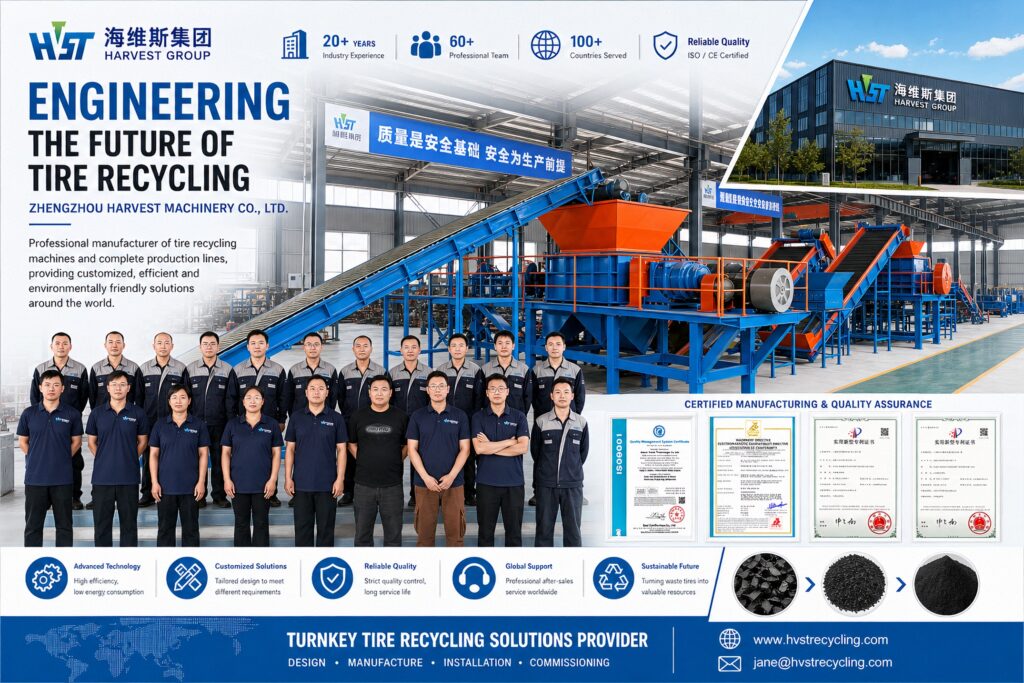
At the same time, the supplier, represented in this case by Zhengzhou Harvest Machinery Co.,Ltd, is actively engaged in the production of the equipment, translating engineering specifications into physical systems.
Rather than operating sequentially, the consultant and the supplier are working in parallel. The consultant continues to define performance targets, compliance thresholds, and integration requirements, while the supplier is actively adapting its engineering and manufacturing processes to meet those expectations in real time.
Manuel Silva, Managing Partner of Uniq Management Group, emphasizes the importance of this phase, mentioning:
“At this stage, the project is defined by how well the manufacturing process reflects the original engineering intent. Our role as consultant is to ensure that what is being built today will perform exactly as required once installed.”
The Limits of Standardization in Ongoing Manufacturing
Standardized machinery configurations may simplify production, but they rarely meet the needs of complex, site-specific industrial facilities, especially during active manufacturing. In the case of this project, a standard configuration would have created misalignment with European environmental expectations, reduced operational efficiency due to variability in input materials, integration gaps between mechanical and automation systems, and higher lifecycle costs due to insufficient durability.
Recognizing these risks, the consultant established strict technical requirements that continue to guide the manufacturing process. The supplier, in turn, is adjusting fabrication methods, assembly logic, and component specifications to ensure that the equipment being produced aligns precisely with these requirements. This ongoing adaptation is critical because it ensures that the equipment leaving the factory will not require major modifications later, a common and costly issue in poorly coordinated industrial projects.
Supplier Excellence: Engineering During Production
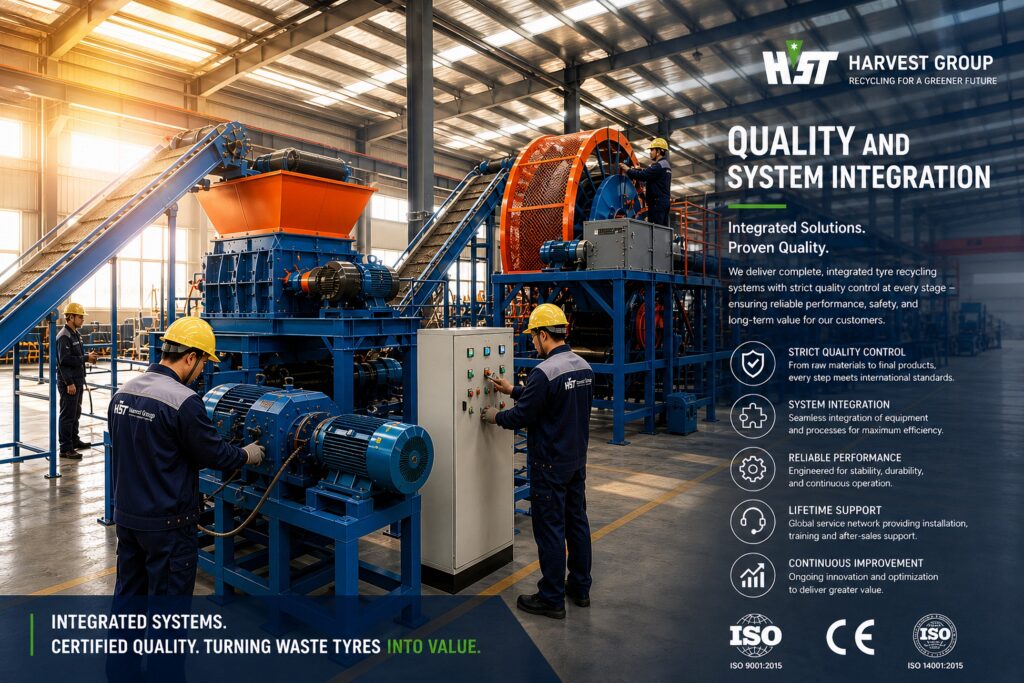
A high-performing supplier demonstrates its true value not only in design, but during production itself. Under the continuous oversight of the consultant, the supplier is embedding key adaptations directly into the manufacturing process. The production sequence is aligned with a customized process flow, ensuring that each machine being fabricated corresponds precisely to the operational requirements defined at the outset. At the same time, critical components such as blades, shafts, and structural elements are being manufactured with enhanced specifications to ensure durability under real operating conditions.
Automation systems are also being assembled with scalability in mind, allowing for real-time monitoring and future expansion, while environmental and safety systems are integrated directly into the equipment rather than added later. This ensures that compliance is inherent to the machinery and not dependent on post-installation adjustments.
Jane Liu (Huili Liu), Director of HVST Group, notes:
“Manufacturing is where the project truly takes shape. By aligning closely with the consultant’s requirements, we are ensuring that every component produced meets not only the specifications, but also the long-term performance expectations.”
Liu also emphasizes that the ability to adjust production parameters in real time is one of the key strengths of the company’s manufacturing approach. She plays a central role in coordinating engineering teams and ensuring that all production decisions remain aligned with project requirements.
Continuous Coordination During Manufacturing
One of the defining aspects of the project is the continuous interaction between the consultant and the supplier throughout the manufacturing phase. This interaction is not limited to periodic updates but involves ongoing validation of engineering drawings, real-time communication regarding fabrication progress, and constant alignment on technical details as they evolve.
A critical layer reinforcing this process is the systematic use of independent, internationally certified third-party inspection companies. These organizations are involved from the early stages of production and remain engaged until the equipment is ready for shipment. Their role includes verifying material quality, inspecting component fabrication, witnessing testing procedures as equipment is completed, and conducting final pre-shipment inspections.
This approach transforms quality control from a final checkpoint into a continuous process embedded within manufacturing. It ensures that every stage of production is independently verified and aligned with both the consultant’s requirements and the supplier’s commitments.
Manuel Silva, Managing Partner of Uniq Management Group, further highlights the importance of this control layer, stating:
“Third-party inspections during manufacturing are essential. They ensure that the supplier’s production process remains fully aligned with the project’s technical and compliance requirements at all times.”
Building Compliance Into the Equipment
A central objective of the project is to ensure that the facility will meet European environmental and industrial standards once operational. This objective is being actively addressed during the manufacturing phase rather than deferred to later stages.
Compliance is being embedded directly into the equipment. Emissions control systems are being fabricated to meet EU-level expectations, energy efficiency considerations are integrated into machine design, safety features are incorporated into assembly, and waste handling mechanisms are designed into the system architecture. This approach ensures that compliance is not treated as an external requirement but as an intrinsic characteristic of the equipment itself.
As Liu highlights:
“Compliance must be built into the manufacturing process, not added afterward. Through close collaboration with consultants and third-party inspections, we ensure that every system is ready to meet international standards from the start.”
She further notes that achieving this level of compliance requires continuous coordination between engineering, production, and quality control teams, especially for customized equipment.
Risk Reduction During the Production Phase
The manufacturing stage is one of the most critical phases in any industrial project, as decisions made during this period have long-term implications for performance, cost, and compliance. In this project, the alignment between the consultant and the supplier, supported by independent inspections, is actively reducing risk at every level.
Technical risks are being minimized through continuous validation of production against engineering specifications, ensuring that the final equipment performs as intended. Financial risks are reduced by avoiding costly modifications after delivery, while operational risks are mitigated by ensuring that the equipment is robust and reliable from the outset. At the same time, regulatory risks are addressed by embedding compliance into the manufacturing process, ensuring alignment with European standards before the equipment even leaves the factory.

A Model for Industrial Execution
The ongoing development of this tire recycling facility provides a clear example of how industrial projects should be executed in today’s environment. It demonstrates that success depends on continuous alignment between the consultant and the supplier, active oversight during manufacturing, integration of compliance into production, and independent verification through certified inspection bodies.
By focusing on these elements during the manufacturing phase, the project is establishing a strong foundation for successful installation, commissioning, and long-term operation.
Delivering Performance Starts in the Factory
In modern industrial development, the most critical phase is not commissioning, it is manufacturing. The work currently being carried out by Uniq Management Group and HVST Group demonstrates that when a consultant provides clear direction and continuous oversight, and a supplier executes with adaptability and precision, the result is equipment that is ready to perform before it even arrives on site.
Supported by rigorous third-party inspections, this approach ensures that quality, compliance, and performance are not left to chance.
For developers and investors, the message is clear: industrial success is built during manufacturing, and it depends on how effectively consultants and suppliers remain aligned throughout that process.