A huge problem faces neurodiverse children who outgrow structured support programs in school and are ready to join the workforce. There is the glaring problem of limited job training and no consistent workplace support.
In the lives of neurodiverse individuals, the transition from school to adulthood is one of the most under-resourced moments. Many autistic young adults finish school and enter a period with little structure, making it a persistent problem.
Research shows that, compared to their peers with other types of disabilities, young adults on the autism spectrum had the lowest rate of employment. 58% ever worked during their early 20s. Research points to the absence of structured transition programs as a primary factor.
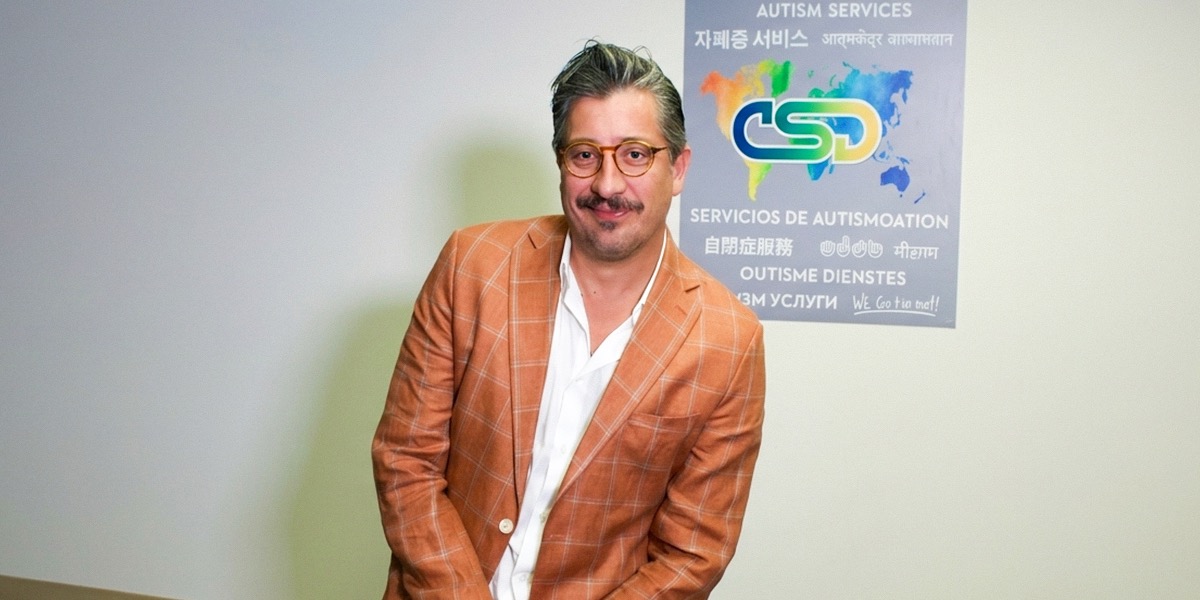
Pete Pallarés, who has for years worked on the front lines of autism care, is now focusing on solving this. He has been watching this trend for years. What he saw repeatedly was a system that invests heavily in early childhood and then steps away. Previously, he helped children build communication skills, manage behavior, and engage with the world around them. His work reached thousands of families across the Bay Area and beyond.
What the Pedro Pallarés Foundation Is Building
The Pedro Pallarés Foundation (PPF) is a nonprofit committed to reducing poverty and improving conditions for under-resourced communities. Neurodiverse support is at the center of its work.
In 2025, the PPF formalized a collaboration with San José City College through its Student Accessibility Services program to create structured academic and employment pathways for adults on the autism spectrum and those with intellectual disabilities.
The first cohort graduated last May. The results were positive. Of the 30 students enrolled across two certificate tracks, Academic Success and Career Preparation, over 85% completed their coursework. Students reported increased confidence, stronger self-advocacy, and a sense of belonging that many had never experienced in an academic setting.
“Together, the Pedro Pallarés Foundation and San José City College are turning inclusion into action, creating real, practical pathways for neurodiverse students to succeed in school, work, and life,” said Dean Rene Alvarez, PhD.
The Two Tracks That Are Making a Difference
The program is built around two focused certificate pathways:
- Academic Success: This covers foundational reading, writing, and math and is designed to give students the tools to handle everyday academic tasks with greater independence.
- Career Preparation: This focuses on job readiness, workplace communication, and employability strategies. It is built to prepare students for actual employment, not just job applications.
Each track is supported by classroom aides funded by the PPF, while San José City College covers faculty salaries and instructional delivery. This shared funding model keeps the program sustainable and removes a major barrier that often kills similar initiatives: cost.
Too many workforce programs for neurodiverse adults are short-term, poorly resourced, or disconnected from employer needs. This one is built differently, with curriculum, support staff, and measurable outcomes all working together.
Employers Are the Missing Piece
Pallarés is direct about where the next challenge sits.
The classroom work is progressing, and the certification is producing graduates. But employment does not happen automatically. It requires employers to participate.
“In the Bay Area, look at all these great companies doing so well. Can they now start giving a chance to a new pool of talent?” Pallarés said.
The next phase of the PPF’s collaboration with San José City College focuses on paid internships for program graduates to connect classroom learning and actual employment. Without it, even the most prepared graduate can stall.
Through his foundation, Pallarés continues to provide academic scholarships for neurodiverse and under-resourced students, emergency financial support for students facing sudden hardship, mental and behavioral health guidance and access, food security and affordable housing advocacy, international outreach supporting communities with limited autism resources, and sports and inclusion programs that build community and social skills.
Continuity Is the Point
Pete Pallarés knows how much early intervention matters. In 2026, his focus has shifted to what happens after school, after therapy, and after the structured years end. The programs being built by the Pedro Pallarés Foundation focus on systems of academic structure, employment training, employer engagement, paid internships, and scholarships.
“To paraphrase Hillel the Elder, ‘If not you, who? If not now, when?’” Pallarés said.
His urgency is beckoning both employers and the families of neurodiverse adults to act.